
- What Is the OODA Loop and How Is AI Changing It?
- Claude AI in the Military Kill Chain
- LUCAS Drone: America Reverse-Engineers Iran's Own Weapon
- The Economics of the AI Drone War
- Operation Epic Fury: Combat Firsts in the Iran War
- A New Global Paradigm for AI in Warfare
- Frequently Asked Questions (FAQ)
Operation Epic Fury has become the most AI-integrated conflict in military history. Here's exactly how artificial intelligence is being used — in drones, targeting systems, and battlefield decision-making — in the ongoing U.S.-Iran war.
When U.S. and Israeli forces launched strikes on Iran on February 28, 2026, they didn't just deploy stealth bombers and cruise missiles. They deployed something far less visible: artificial intelligence. From target identification to drone guidance to real-time battlefield decision-making, AI in warfare is no longer theoretical and the 2026 Iran conflict is its most consequential test yet. Let's have a deeper look at AI in the Iran War 2026: the Future of Military AI.
What Is the OODA Loop and How Is AI Changing It?
Military strategists have long operated by the OODA framework: Observe, Orient, Decide, Act. In past wars, each step took hours or days. Today, AI is compressing that cycle to minutes or less.
What Is the OODA Loop and How Is AI Changing It? According to Amir Husain, co-author of Hyperwar: Conflict and Competition in the AI Century, AI is playing a significant role across all four phases of the OODA loop in the Iran campaign. It interprets satellite and electronic surveillance data, supports tactical decision-making, and directly guides autonomous drones in environments where human operators lose signal due to jamming. The result is a decision-making tempo that traditional adversaries simply cannot match.
Craig Jones, a lecturer at Newcastle University and author of The War Lawyers, put it bluntly: "The AI machine is making recommendations for what to target, which is actually much quicker in some ways than the speed of thought." Jones has argued that the speed and scale of the U.S.-Israeli strikes which resulted in the death of Supreme Leader Ayatollah Ali Khamenei, may not have been operationally possible without AI-assisted targeting.
Claude AI in the Military Kill Chain
Perhaps the most striking revelation to emerge from the conflict is that Anthropic's Claude AI model has been deployed by U.S. combatant commands for intelligence synthesis, target identification, and battle scenario simulation even as the Trump administration had previously sought to blackball the company from federal contracts.
The Wall Street Journal first reported Claude's use in the operation. The Pentagon had previously used AI tools to streamline logistics and analyze drone feeds, but the integration of a large language model into active combat operations represents a landmark shift. Claude is being used not to pull a trigger, but to accelerate the thinking that happens before the trigger is pulled.
Google's Gemini models are also reportedly in talks for integration into classified Pentagon environments, suggesting that the AI-military relationship will only deepen regardless of political tensions between the tech and defense sectors.
LUCAS Drone: America Reverse-Engineers Iran's Own Weapon
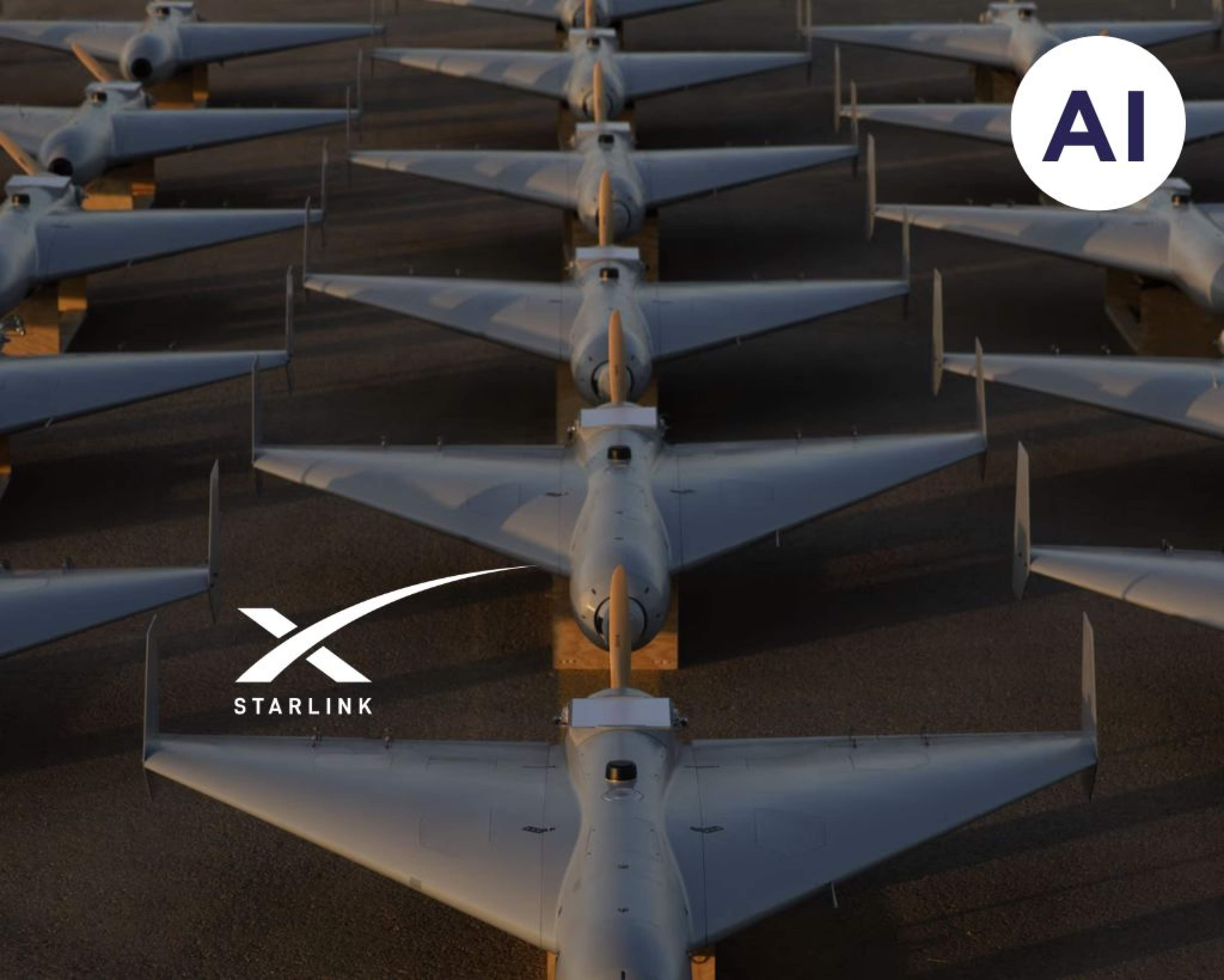
One of the most tactically significant developments in the Iran war 2026 is the debut of LUCAS — the Low-Cost Unmanned Combat Attack System. At approximately $35,000 per unit, LUCAS is modeled directly on Iran's own Shahed-136 delta-wing attack drone, the same cheap, attrition-based weapon Iran supplied to Russia in Ukraine and deployed extensively across the Persian Gulf.
"We took them back to America, made them better, and fired them right back at Iran," said Admiral Brad Cooper, head of U.S. Central Command. The comment encapsulates a broader strategic logic: the future of warfare is not just about expensive, high-precision weapons, but about mass-producing low-cost autonomous drones that can overwhelm air defenses through sheer volume.
Ukraine's experience on the front lines of drone warfare played a notable supporting role. Ukrainian manufacturers — who produced approximately 4.5 million drones in 2025 alone — developed low-cost interceptor drones specifically designed to hunt Shaheds. As the Iran conflict escalated, the U.S. formally requested Ukrainian drone interceptors and technical specialists to help defend Gulf allies against Iranian swarm attacks.
AI is already here. The only question is how you use it. From battlefields to boardrooms, artificial intelligence is reshaping the world, whether we're ready or not. The organizations that thrive won't be the ones who waited. They'll be the ones who built the right foundation. PlusClouds gives you enterprise-grade cloud infrastructure to run AI workloads on your terms — reliably, securely, and at scale. The future doesn't wait. Neither should you. → Explore PlusClouds

The Economics of the AI Drone War
Iran's military drone strategy is built around an uncomfortable arithmetic. The Shahed flies slow and low, making it harder to detect than a ballistic missile, at a cost of roughly $20,000 per unit. Shooting it down with a Patriot PAC-3 interceptor costs several million dollars. Repeat that equation a thousand times, and the math becomes brutal for the defending side.
Since the war began on February 28, Iran has reportedly fired over 500 ballistic missiles and nearly 2,000 drones at U.S. and regional targets. The UAE alone reported intercepting over 1,000 Iranian drones and nearly 200 missiles in the first days of the conflict. At least one Gulf ally was already running low on interceptor munitions within four days of the opening strikes.
The U.S. is responding partly through AI-guided low-cost interceptors like the APKWS — a laser-guidance kit attached to a $3,000 Hydra rocket for a total cost of around $25,000. It is a direct answer to the asymmetric economics of modern drone warfare.
Operation Epic Fury: Combat Firsts in the Iran War
Beyond AI and drones, Operation Epic Fury has produced a series of remarkable operational milestones that signal a new era of high-tech warfare:
The F-35 proves itself in combat. Long criticized for cost overruns and delays, the F-35 is having its breakthrough moment. Both Israeli Air Force F-35Is and coalition F-35Bs have been engaged in active operations, demonstrating the stealth fighter's real-world value for the first time at scale.
The first U.S. torpedo kill since World War II. A U.S. Navy submarine sank an Iranian warship in the Indian Ocean using a single Mk 48 torpedo — the first such engagement since 1945. Joint Chiefs Chairman General Dan Caine called it "an incredible demonstration of America's global reach."
The GBU-57 Massive Ordnance Penetrator sees its operational debut. In the earlier Operation Midnight Hammer last June, seven B-2 stealth bombers dropped 14 of these 30,000-pound bunker-busting bombs on Iran's hardened nuclear facilities at Fordo, Natanz, and Isfahan.
Precision Strike Missiles (PrSM) used in combat for the first time. The Lockheed Martin-made ballistic missile, compatible with the HIMARS launcher, saw its first-ever operational deployment against Iranian targets.
A New Global Paradigm for AI in Warfare
What is unfolding in the skies over the Persian Gulf is not just a regional conflict, it is a live demonstration of where AI-powered warfare is heading. AI is accelerating every phase of the kill chain. Cheap, autonomous drones are replacing expensive precision munitions. And the line between human decision-making and machine recommendation is blurring in real time.
The Rest of World publication noted that the conflict is "outpacing global rules of war," with no established international framework governing AI-assisted targeting, autonomous drone swarms, or accountability when machines help determine who lives and who dies. As Steven Feldstein, a senior fellow at the Carnegie Endowment for International Peace, observed: the rules and accountability norms needed to handle AI's growing role in warfare simply do not yet exist.
The Iran war has become the world's first truly AI-integrated conflict and the lessons it teaches will shape military doctrine, international law, and the global technology race for decades to come.
At PlusClouds, we keep a close eye on how emerging technologies are reshaping the world. Want to stay informed and share your perspective? Join our community — where the conversation is always ahead of the curve. → Join the PlusClouds Community

Frequently Asked Questions (FAQ)
What is Operation Epic Fury? Operation Epic Fury is the codename for the ongoing U.S.-led military campaign against Iran, launched on February 28, 2026. It followed Operation Midnight Hammer in June 2025, which used B-2 stealth bombers to destroy Iran's hardened nuclear facilities. The current operation expanded into a broader conflict involving naval engagements, drone warfare, and coalition ground operations.
How is AI being used in the Iran war? AI is operating across multiple layers. At the intelligence level, large language models like Claude are processing satellite imagery and signals data to identify targets and run battle simulations. At the operational level, AI is guiding autonomous drones in GPS-denied, signal-jammed environments. At the logistics level, AI is coordinating supply chains, munitions allocation, and maintenance in real time.
Is AI making autonomous kill decisions in the Iran conflict? Not entirely — but the boundary is shrinking. Human commanders retain final authority, but in drone-on-drone intercept scenarios where reaction time is measured in seconds, AI systems are operating with significant autonomy. The distinction between "recommendation" and "decision" becomes increasingly theoretical at combat speed.
What is the LUCAS drone and why does it matter? LUCAS (Low-Cost Unmanned Combat Attack System) is a U.S.-made autonomous attack drone deliberately modeled on Iran's own Shahed-136. At roughly $35,000 per unit, it is built for volume and attrition rather than precision. It represents a strategic pivot: rather than outspending adversaries, the U.S. is now matching them drone-for-drone at low cost.
Why is Iran's drone strategy so hard to counter? Each Iranian Shahed drone costs around $20,000, while the interceptor missiles used against them cost millions. When Iran launches drones in the hundreds or thousands, defending nations burn through expensive munitions unsustainably. Gulf allies were reportedly running critically low on interceptors within just four days of the conflict starting.
Has AI caused any unintended civilian incidents in the war? No confirmed AI-caused friendly fire or civilian targeting errors have been publicly reported as of early March 2026. However, legal scholars warn that the speed of AI-assisted targeting leaves less room for the contextual human judgment that international humanitarian law requires. Ongoing strike investigations remain active.
What international laws govern AI weapons and military drones? Very few. The Geneva Conventions predate autonomous weapons entirely. There is no binding international treaty governing lethal autonomous weapons systems (LAWS) or AI-integrated targeting. The UN has held years of discussions without a consensus agreement, leaving a major legal vacuum that the Iran conflict is now stress-testing in real time.
Can other countries replicate U.S. AI military capabilities? Yes — and many are actively trying. China has invested heavily in AI-integrated drone swarms and autonomous naval systems. Russia has deployed AI targeting systems in Ukraine. Iran uses AI for drone navigation and target recognition. The U.S. lead is real but not permanent, which is why analysts warn the window for establishing international norms is closing fast.
What comes next for AI in warfare after the Iran conflict? The conflict is expected to massively accelerate global AI military investment. The Pentagon's FY2026 supplemental budget includes significant new funding for autonomous systems and AI targeting. Defense tech companies like Palantir, Anduril, and Shield AI are expected to expand their roles substantially. The central question for policymakers is no longer whether AI will define future warfare — it's whether the rules governing it will be written before or after the next escalation.
Sources: Axios, Washington Times, Fortune, Rest of World, CNN, Al Jazeera, Wikipedia (2026 Iran war), Newsweek