- Why RAM Matters More Than Ever
- AI Workloads vs Traditional Computing
- The Memory Explosion Caused by Large Language Models
- Training vs Inference: Two Different RAM Crises
- Why Moore’s Law Doesn’t Save Us Anymore?
- Global RAM Supply Constraints
- Cloud Providers and the Memory Arms Race
- The Role of Cloud Infrastructure Providers in a Memory-Constrained AI Era
- Economic and Environmental Impact
- Potential Solutions to the RAM Shortage
- 1. Model Optimization
- 2. Memory Hierarchy Innovation
- 3. Software-Level Efficiency
- 4. Edge and Specialized AI
- What This Means for the Future of AI
- Conclusion: A Memory-Constrained World
“The world is running out of RAM”, that’s the claim behind thousands of viral TikTok videos, and while it sounds like clickbait, the uncomfortable truth is that AI is pushing global memory infrastructure closer to its limits than most people realize. Artificial Intelligence (AI) is no longer a futuristic concept, it is a present-day infrastructure challenge. As large language models (LLMs), generative AI systems, autonomous agents, and real-time analytics platforms scale at unprecedented speed, one critical hardware component is quietly becoming the bottleneck of the digital age: RAM (Random Access Memory).
A growing number of experts are asking a provocative question:
Will there be enough RAM in the world to support the AI revolution?
This article explores why AI is driving an explosive demand for memory, how this could lead to a global RAM shortage, what it means for cloud providers, enterprises, and consumers, and how the industry may adapt.
Why RAM Matters More Than Ever
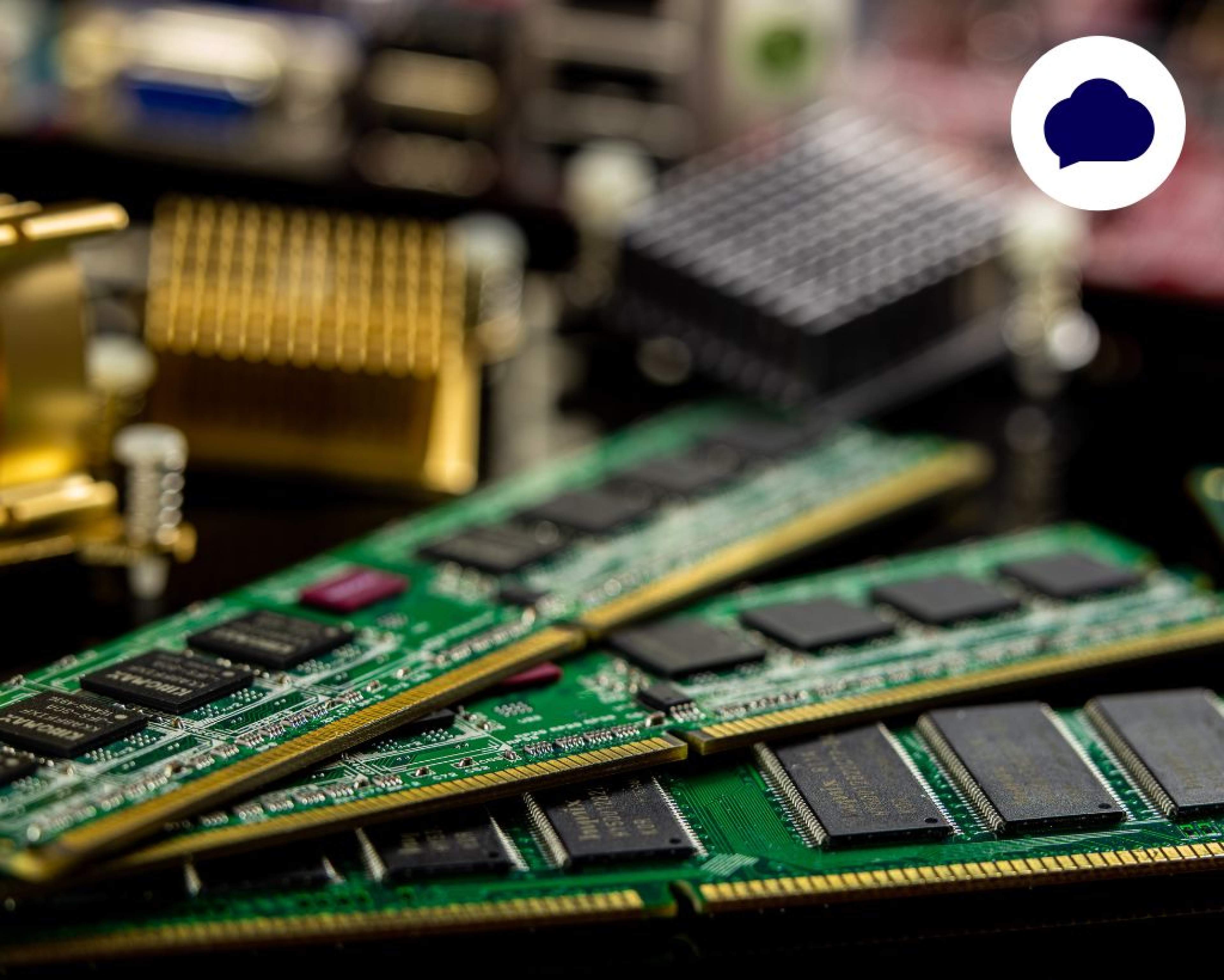
RAM is the working memory of a computer. Unlike storage (SSD or HDD), RAM determines:
- How much data can be processed simultaneously
- How fast models can respond
- Whether applications can scale in real time
For decades, CPU speed was the main performance metric. Today, especially in AI systems, memory capacity and bandwidth are often more critical than raw compute power.
In AI, if you don’t have enough RAM, your model simply cannot run.

AI Workloads vs Traditional Computing
Traditional applications:
- Web servers
- Databases
- Office software
- ERP systems
These workloads:
- Process relatively small data chunks
- Rely on disk I/O
- Can tolerate latency
AI workloads, by contrast:
- Load entire models into memory
- Require massive parallelism
- Operate continuously
- Are extremely memory-hungry
Key Difference:
Traditional software scales with CPU. AI scales with RAM.
The Memory Explosion Caused by Large Language Models
Let’s look at modern AI models:
| Model | Parameters | RAM Needed (Inference) |
|---|---|---|
| GPT-3 | 175 billion | ~350–700 GB |
| GPT-4-class models | Trillions (est.) | Several TB |
| Open-source LLMs (70B) | 70 billion | 140–280 GB |
This is per instance.
Now multiply this by:
- Thousands of concurrent users
- Redundancy requirements
- High availability clusters
- Edge deployments
Suddenly, terabytes of RAM per service become normal.
Training vs Inference: Two Different RAM Crises
AI Training
Training models requires:
- Massive GPU clusters
- Extremely high-bandwidth memory (HBM)
- Synchronized memory access
A single training run can consume:
- Petabytes of memory over time
- Tens of thousands of GPUs
AI Inference
Inference (serving models to users) creates a different problem:
- Persistent memory usage
- Always-on models
- Horizontal scaling
This leads to permanent RAM occupation, not temporary spikes.
Why Moore’s Law Doesn’t Save Us Anymore?
Moore’s Law predicted exponential growth in transistor density. However:
- RAM density growth is slowing
- Memory latency improvements are minimal
- Power consumption per GB is rising
- Manufacturing complexity is increasing
Meanwhile, AI model size is growing faster than hardware improvements. AI demand is exponential. RAM supply is linear. This mismatch is the core of the coming shortage.
Global RAM Supply Constraints
Limited Manufacturers
The global RAM market is dominated by:
- Samsung
- SK Hynix
- Micron
This creates:
- Supply chain fragility
- Price volatility
- Geopolitical risk
Competing Demand
RAM is needed by:
- Smartphones
- PCs
- Servers
- Automotive systems
- IoT devices
- AI accelerators
AI doesn’t replace these demands. It adds to them.
Cloud Providers and the Memory Arms Race
Major cloud providers are already reacting:
- Memory-optimized instances (1–24 TB RAM)
- Custom silicon
- Vertical integration
- Proprietary memory architectures
But even hyperscalers face limits:
- Data center power constraints
- Cooling challenges
- Rising costs per GB
Smaller companies and startups are increasingly priced out of high-memory infrastructure.
The Role of Cloud Infrastructure Providers in a Memory-Constrained AI Era
As global RAM demand accelerates due to AI workloads, the importance of robust, flexible cloud infrastructure becomes more critical than ever. While no single provider can eliminate the physical limitations of memory manufacturing, infrastructure platforms play a decisive role in how efficiently memory is allocated, scaled, and utilized.
PlusClouds operates precisely at this intersection. Rather than positioning itself as a single-purpose AI platform, PlusClouds provides a reliable, scalable cloud infrastructure foundation, including compute, storage, networking, security, observability, and high availability, that enables organizations to run modern AI workloads more efficiently. In a world where RAM is scarce and expensive, architectural decisions matter as much as raw hardware capacity. For teams that require deeper control, PlusClouds also offers adjustable server configurations, allowing memory, compute, and resource profiles to be tailored to specific workload characteristics rather than forcing a one-size-fits-all model.
By designing environments that support:
Memory-efficient workload distribution
High-availability architectures without unnecessary memory duplication
Flexible scaling for AI inference and data-intensive applications
PlusClouds helps teams focus on optimizing how memory is used, not just how much memory is consumed. This approach becomes increasingly valuable as AI-driven systems transition from experimental projects into long-running, production-grade services where every gigabyte of RAM has a measurable cost.
As the AI ecosystem moves toward a future defined by memory constraints rather than compute abundance, infrastructure providers that prioritize efficiency, transparency, and architectural freedom will be essential partners. If you want to explore these challenges deeper and get thoughtful answers to complex infrastructure questions like this, join our community and be part of the conversation.

Economic and Environmental Impact
Rising Costs
- RAM prices increase during shortages
- AI services become more expensive
- Innovation slows for smaller players
Energy Consumption
RAM consumes power even when idle:
- Always-on inference models
- Persistent memory footprints
- Cooling overhead
The environmental cost of AI is increasingly a memory problem, not a compute problem.
Potential Solutions to the RAM Shortage
1. Model Optimization
- Quantization
- Pruning
- Sparse architectures
- Mixture-of-experts (MoE)
2. Memory Hierarchy Innovation
- CXL (Compute Express Link)
- Disaggregated memory
- Unified CPU-GPU memory pools
3. Software-Level Efficiency
- Better caching strategies
- Streaming inference
- Stateless architectures
4. Edge and Specialized AI
- Smaller, task-specific models
- On-device inference
- Reduced centralized memory pressure
None of these fully solve the problem, they only delay it.
What This Means for the Future of AI
In a memory-constrained world:
- The biggest models win
- Capital concentration increases
- AI becomes infrastructure, not software
- Memory efficiency becomes a competitive advantage
Future breakthroughs may come not from bigger models, but from smarter memory usage.
Conclusion: A Memory-Constrained World
The question is no longer whether AI will strain global RAM supply.
The question is how soon.
Artificial Intelligence is fundamentally changing the economics of computing. As models grow larger and more pervasive, RAM becomes the new oil, a scarce, strategic resource that determines who can innovate and who cannot.
The AI revolution will not be limited by ideas. It will be limited by memory.