
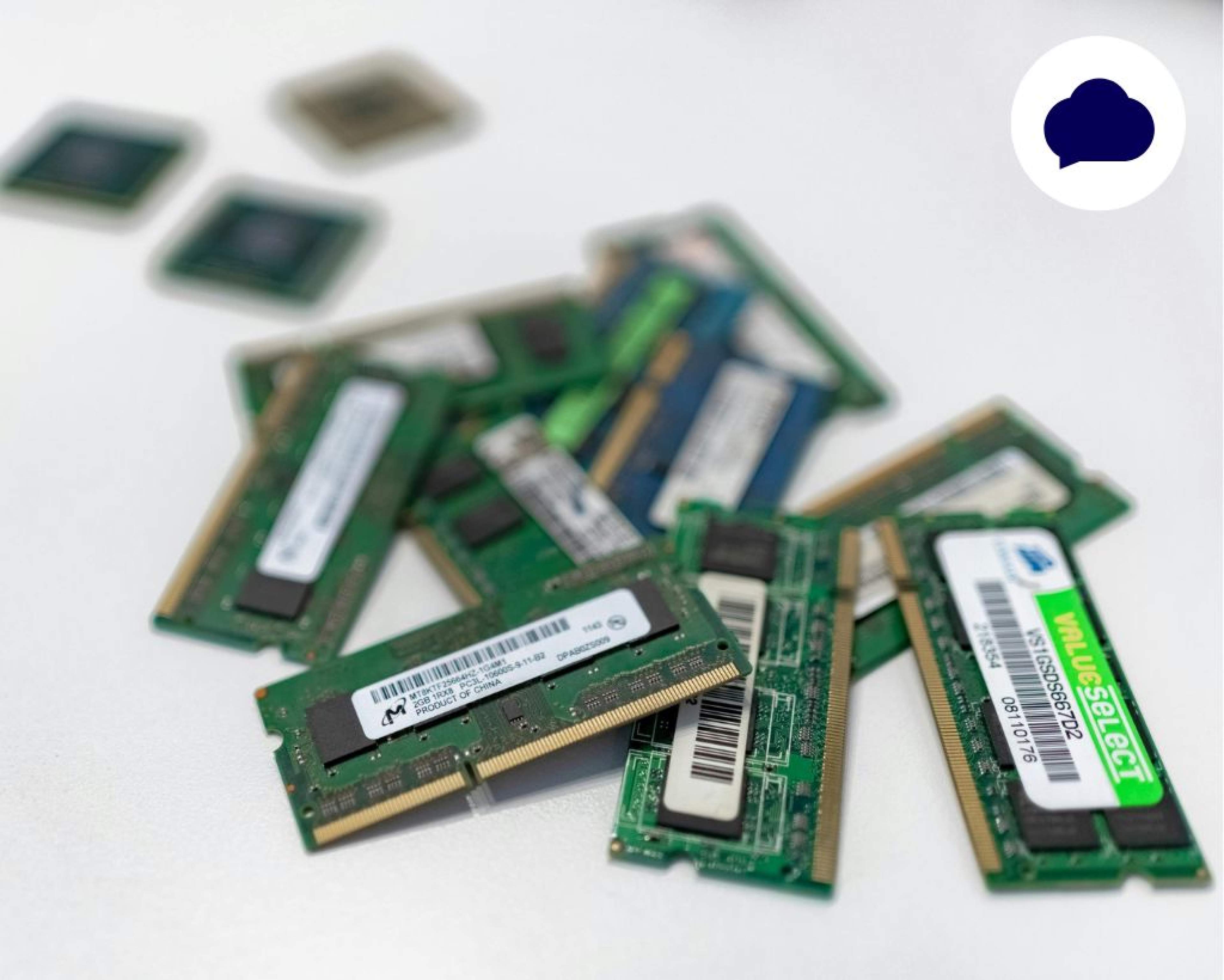
- Understanding the Global RAM Crisis
- RAM Prices Are Expected to Double and Stay High
- Delays in Automobile Production Are Expected
- Expected Impact on the Automotive Industry
- Rising Prices Across Consumer Technology Products
- 70% of Global RAM Production Expected to Go to Data Centers
- AI and Cloud Computing Are Accelerating the Crisis
- Graphics Card Manufacturers Re-Releasing Older Models
- Long-Term Effects on the Global Technology Ecosystem
- How Businesses Can Prepare for the RAM Shortage
- How PlusClouds Helps Businesses Navigate the RAM Crisis
- PlusClouds Advantages During the RAM Crisis
- Final Thoughts: Memory Is the New Bottleneck
The global technology ecosystem is entering a critical phase driven by an escalating RAM (Random Access Memory) supply crisis. From data centers and cloud infrastructure to consumer electronics and automotive manufacturing, RAM shortages are creating ripple effects across industries.
This article explores the expected events caused by the global RAM crisis, why it’s happening, who will be most affected, and how businesses can strategically prepare for what’s coming next. To access our previous articles about the RAM crisis: Will the World Run Out of RAM? How Artificial Intelligence Is Creating a Global Memory Shortage
Understanding the Global RAM Crisis
RAM is one of the most essential components in modern computing. Every smartphone, server, vehicle control unit, graphics card, and smart appliance depends on it. However, a combination of factors has pushed global RAM supply into a severe imbalance.
Key Drivers Behind the Crisis
- Explosive growth in AI and data center workloads
- Increased memory requirements per server
- Limited manufacturing capacity among major DRAM producers
- High capital costs for new fabrication plants
- Geopolitical and supply chain disruptions
As a result, demand is outpacing supply at an unprecedented scale.
RAM Prices Are Expected to Double and Stay High
One of the most immediate and visible outcomes of the RAM crisis is pricing pressure.
What to Expect
- RAM prices are expected to at least double in a short period
- Price corrections are unlikely in the near or mid-term
- Long-term contracts are becoming more expensive and restrictive
Why Prices Won’t Fall Again Easily
- DRAM manufacturing requires massive capital investment
- Production expansion takes years, not months
- Data center demand absorbs new supply immediately
- Manufacturers prioritize higher-margin enterprise customers
This creates a “new normal” where memory is structurally more expensive than before.

Real discussions. Real experts. Join our community and ask your questions.

Delays in Automobile Production Are Expected
Modern vehicles are no longer mechanical systems alone, they are rolling computers.
Why Cars Depend on RAM
- Advanced Driver Assistance Systems (ADAS)
- Infotainment and digital dashboards
- Autonomous driving modules
- Vehicle-to-everything (V2X) communication
Even minor RAM shortages can halt entire production lines.
Expected Impact on the Automotive Industry
- Production delays for new vehicle models
- Increased costs per vehicle
- Supply shortages for electronic control units (ECUs)
- Longer delivery times for consumers
Automakers are now competing directly with tech companies for memory supply and often losing.
Rising Prices Across Consumer Technology Products
The RAM crisis won’t stay invisible to consumers.
Products Likely to Increase in Price
- Smartphones
- Televisions
- Laptops and desktop computers
- Home appliances (smart refrigerators, washing machines, etc.)
- Gaming consoles and peripherals
Why Prices Are Going Up
- RAM is a core cost component
- Manufacturers cannot fully absorb price increases
- “Feature inflation” (more memory per device) worsens the issue
Consumers should expect higher retail prices and fewer budget-friendly configurations.
70% of Global RAM Production Expected to Go to Data Centers
Perhaps the most critical data point: An estimated 70% of all RAM produced this year is expected to be allocated to data centers.
Why Data Centers Dominate RAM Demand
- AI training and inference workloads
- In-memory databases
- Virtualization and container orchestration
- High-density cloud computing
- Real-time analytics and streaming platforms
Enterprise and hyperscale customers sign long-term agreements, effectively locking out other industries from supply.
AI and Cloud Computing Are Accelerating the Crisis
AI workloads are exceptionally memory-hungry.
Examples
- Large Language Models (LLMs)
- Recommendation engines
- Image and video processing
- Predictive analytics
Each generation of AI models requires more RAM per node, increasing pressure on global supply and reinforcing the dominance of data centers in memory allocation.
Graphics Card Manufacturers Re-Releasing Older Models
Another unexpected consequence of the RAM shortage is in the GPU market.
What’s Happening
- Unsold older GPU models are being re-released
- Manufacturers are adjusting configurations to reduce memory usage
- Focus shifts to clearing inventory rather than innovation
Why This Matters
- New GPU launches may slow down
- Consumers may see “refreshed” versions of older hardware
- Performance-per-dollar gains will stagnate temporarily
This is a defensive move to navigate memory constraints without halting sales entirely.
Long-Term Effects on the Global Technology Ecosystem
The RAM crisis is not a short-term fluctuation, it’s a structural shift.
Expected Long-Term Changes
- More efficient memory usage in software design
- Greater focus on optimization over brute-force scaling
- Increased importance of infrastructure planning
- Higher barriers to entry for hardware-intensive startups
Memory efficiency is becoming a competitive advantage.
How Businesses Can Prepare for the RAM Shortage
Forward-thinking organizations are already adapting.
Strategic Actions
- Optimize applications for lower memory consumption
- Adopt scalable cloud architectures
- Avoid over-provisioning
- Monitor infrastructure utilization closely
- Lock in long-term infrastructure partnerships
The key is doing more with less memory, without sacrificing performance.
How PlusClouds Helps Businesses Navigate the RAM Crisis

At PlusClouds, infrastructure efficiency and flexibility are critical strengths especially during global hardware constraints like the RAM crisis.
While PlusClouds does not manufacture hardware, it provides robust cloud infrastructure that helps organizations adapt to limited memory availability intelligently.
PlusClouds Advantages During the RAM Crisis
1. Optimized Compute Infrastructure
Efficient resource allocation helps customers avoid unnecessary memory waste while maintaining performance.
2. Scalable Architecture
Easily scale workloads based on real demand, not worst-case assumptions, reducing excess RAM usage.
3. Support for Modern Workloads
Ideal for containerized applications, Kubernetes environments, and memory-aware architectures.
4. Infrastructure Flexibility
Customers can deploy their preferred software stacks, databases, and optimization tools without platform lock-in.
5. Observability & Control
Better visibility into resource usage allows teams to identify memory bottlenecks early and act decisively.
In a world where RAM is becoming more expensive and scarce, infrastructure efficiency is no longer optional, it’s essential. PlusClouds provides the foundation businesses need to stay resilient and competitive. For more information, visit our website: PlusClouds
Final Thoughts: Memory Is the New Bottleneck
The global RAM crisis is reshaping industries far beyond traditional computing. From cars and consumer electronics to cloud platforms and AI systems, memory availability is becoming a defining constraint of modern technology.
Organizations that:
- Plan ahead
- Optimize intelligently
- Choose flexible infrastructure partners
will be the ones that thrive in this new environment.
As RAM becomes more valuable, how you use it matters more than how much you have.